

 Share on Facebook
 A new virus from the coronavirus family has been identified as responsible for acute respiratory syndrome which, starting in the Chinese city of Wuhan, is now spreading all over the world. The outbreaks of pneumonia began last December particularly in people who had visited the fish market and already on January 9 this year the genetic sequence of the virus belonging to the same family that had infected thousands of people in 2002-2003 was identified with a mortality of 10%, SARS (Severe Acute Respiratory Syndrome). A month after the official communication to the World Health Organization (WHO), we are faced with the contagion of 9,700 cases with 213 deaths (31-01-2020).
Transmission from one person to the other was established after three weeks of the report to the WHO and thus the passage from Wuhan to Thailand, Hong Kong and South Korea. Experts from the University of Southampton identified the cities and nations to more high risk worldwide for the spread of the new coronavirus (2019-nCoV). After a month the virus has already arrived in all continents from Asia (Taiwan, Japan, Singapore, Malaysia, Vietnam, Nepal, India) to Australia, Africa (Ivory Coast), the Americas (USA, Canada , Mexico) and Europe (France, Germany, Finland) and from yesterday in Italy - two Chinese from a tourist group that after a week from Milan have arrived in Rome.
Let us now try to establish the etiopathogenesis, that is the how and why of the current SARS and above all how we can prevent future epidemic outbreaks. Respiratory syndrome of the Middle East (MERS) helps us understand the entry door of the cells by the virus of both the bat and the camels or of the different animals (civet, ferret, rodents, pigs, dogs, cats, monkeys) to get there then to us humans.
"Angiotensin converting enzyme 2" (ACE 2) is the same cell surface receptor used by the virus studied by the scientific group of the Wuhan Institute of Virology. Therefore it is known how the virus depicted the key suitable for opening the keyhole, i.e. the biochemical basis for penetrating the human cell. At least 50 coronaviruses have been isolated in bats (mostly from the intestine) which represent the true reservoir of this viral family.
3% of farmers working in the fields of Yunnan province, southwest of China, have antibodies to these bat coronaviruses. The meaning of all this is that in this region there is an infection by the aforementioned viruses with a mild disease without clinical signs or causing a respiratory disease that has never been properly diagnosed. This epidemic outbreak has now happened in southern China.
If then we want to hypothesize that the virus was spread due to a clumsy spread from the Wuhan bacteriological research center (technician or researcher infected without his knowledge), then we can fear more about the globalization of the infectious agent for the reasons mentioned above.
If we really think that epidemics and pandemics will emerge again, as happened in this period, it is necessary to deepen the studies on the treatments with monoclonal antibodies or potential vaccines at the cost of a few hundred million dollars otherwise we will spend billions of millions of dollars for don't talk about human lives.
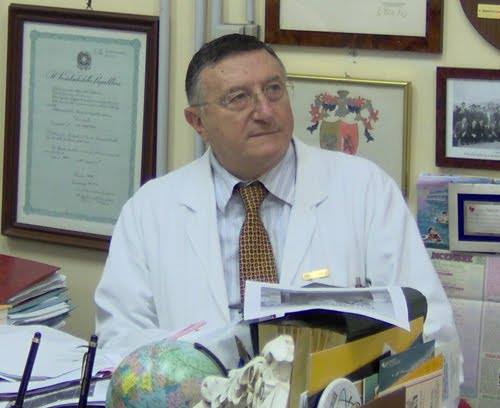
Prof. Giulio Tarro
Primario emerito dell’ Azienda Ospedaliera “D. Cotugno”, Napoli
Chairman della Commissione sulle Biotecnologie della Virosfera, WABT - UNESCO, Parigi
Rector of the University Thomas More U.P.T.M., Rome
Presidente della Fondazione de Beaumont Bonelli per le ricerche sul cancro - ONLUS, Napoli
Tel/Fax +390815358222
Cell. +393393546347
