

 Oggi 16-2-1979.pdf Oggi 16-2-1979.pdf | [Oggi 16-2-1979] | 305 kB |
| Oggi 2-3-1979.pdf | [Oggi 2-3-1979] | 579 kB |
| Oggi 20-4-1979.pdf | [Oggi 20-4-1979] | 331 kB |
| Oggi 22-8-1990.pdf | [Oggi 22-8-1990] | 1111 kB |
| Oggi 26-1-1979.pdf | [Oggi 26-1-1979] | 1972 kB |
| Oggi 8-6-1979.pdf | [Oggi 8-6-1979] | 789 kB |
| Oggi 9-2-1979.pdf | [Oggi 9-2-1979] | 977 kB |
| Virus sinciziale e non solo.pdf | [Virus sinciziale e non solo] | 2407 kB |
 Share on Facebook
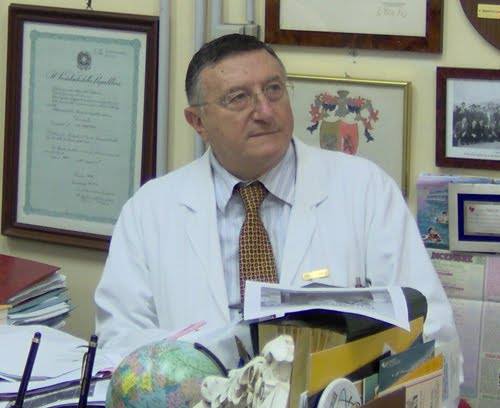 Prof. Dott. Giulio Tarro Phd MD
I have always been keen on the story of my fellow countryman "colleague": the protomedico Giovanni Filippo Ingrassia who faced the plague epidemic (1575-76) of Palermo containing its effects: three thousand deaths. Very little compared to eighteen thousand in Milan and thirty thousand in Genoa. Years before, he had already proved himself identifying in the swamp lands, fed by the river Papireto, which surrounded the city of Palermo the cause of malaria. Obviously, without knowing anything - given the time - of Plasmodium malariae and how this was transmitted by mosquitoes. But reflecting on how this infection spread among the population. Unfortunately for him he did not see the results of his intuitions: only in 1591 (11 years after his death) the praetor Salazar had the river Papireto channelled determining the disappearance of malaria from Palermo.
Other satisfactions had to give him his intervention against the plague that he managed to contain thanks to his exceptional spirit of observation. His attentions focused, therefore, on a load of carpets - most likely infested with fleas - coming from Africa through the "La Galeotta" boat. Ingrassia discovered that the places where these carpets were sorted were outbreaks of infection. It imposed, therefore, an absolutely innovative: the embargo of goods from "suspect" countries and the isolation of the sick. And so in Palermo the plague epidemic (1575-76) killed "only" three thousand people. Very little compared to eighteen thousand in Milan and thirty thousand in Genoa.
The provision of Ingrassia marked the birth of modern Public Health and, therefore, of Epidemiology; a discipline that seemed absolutely forgotten in Naples in 1978, when the city was hit by the so-called "Dark Evil".
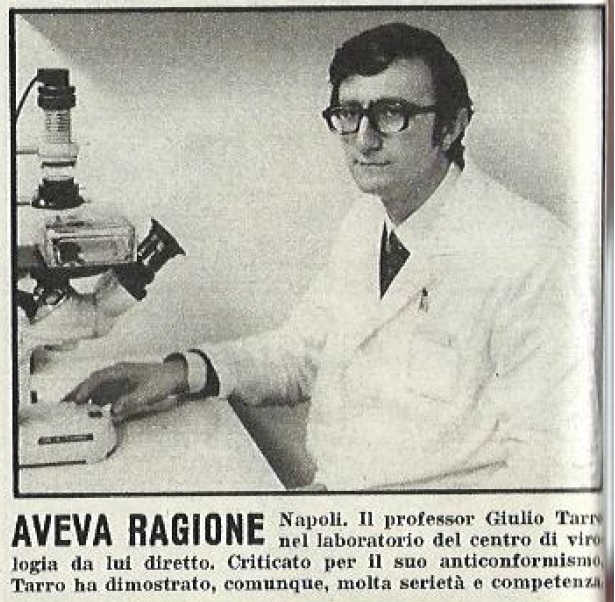 In the summer of that year, reports of a surge of deaths among the children admitted to the paediatric hospital Santobono for "encephalitis" began to appear in the newspapers. To further mislead from a correct diagnosis was the fact that the children, often arrived in a coma at the hospital, were entrusted not to the paediatrician but directly to the reanimator (who focused his attention on the lack of oxygen to the brain), the suspect that the deaths could be determined by a series of vaccinations (in recent months there were five deaths attributed to vaccines against diphtheria and tetanus) the lack of collaboration between the Santobono Hospital and the Cotugno Hospital (responsible for dealing with infectious diseases, infectious emergencies and therefore equipped with laboratories of analysis certainly more efficient than those of other hospitals) and especially the choice of the Santobono Hospital to preserve the histological samples of children who died in the refrigerator, resulting in the death of the respiratory syncytial virus (VRS) responsible, as it will be verified later, of the bronchiolitis and, therefore, of the death consequent to the coma.
Then there was the incomprehensibility of the medical records drawn up in an approximate way that made it impossible to understand what had happened to the child in the early hours of the manifestation of evil: in many cases it was not even reported the weight of the new-born, any therapeutic manoeuvres put in act as the intubation (a manoeuvre absolutely not recommended in infants with bronchiolitis) and some values of the arterial blood. To make matters worse, the Santobono lack of housings saturated with moist oxygen, the use, often in high doses, of drugs such as Cortisone and the use of liquid endovenous supply which, in some cases, led to brain haemorrhages.
Add to this, when the epidemic of "Dark Evil" deserved the honour of the chronicles, the spill over to the Santobono of small patients with severe respiratory symptoms admitted to other health facilities, of Campania and it will be understood why an epidemic of bronchiolitis not much more serious than those that periodically invested the Campania turned into a "Dark Evil" that threw into the panic tens of thousands of people; people who, of course, were unaware that the Santobono at that time concentrated the deaths that until then occurred in the rest of Campania.
But the real reason for the "Male Oscuro" emergency - in addition to the very poor sanitary conditions in which Naples was located, with innumerable inhabitants crammed into cold and damp "downs" - were baronies that infested (and invested) the health system and saw "Evil Dark" yet another opportunity to beat cash even if the expensive structures that already ran could have worked enormously better if only they had a more careful management.
The "Dark Evil" alarm began in the middle of the summer when, in a short period of time, five children entered a coma and died (diagnosis encephalitis) a few hours after vaccination against diphtheria and tetanus (DT). The cause of death was identified in the vaccines, these were immediately withdrawn from the trade and from the clinics and sent in a hurry to the Higher Institute of Health to be analysed. That excluded every responsibility of those vaccines in the death of new-borns.
At the time, although I was Primary at the Cotugno Hospital for Infectious Diseases, I found out about what was already called "Male Oscuro", basically from the newspapers. Nobody, in fact, had thought of involving the department that I managed in managing that emergency. Yet I think that some help could have given it since the beginning of the emergency; also because I think I was one of the first Italian researchers to be interested in the syncytial virus, identified as early as 1956 and responsible for innumerable hospital admissions of children.
And now, two words about this pathology.
Respiratory infections caused by flu-like viruses, which also include the syncytial virus, are seasonal phenomena that recur each year in our climates at the beginning of winter: they are mainly benign infections that can affect even 50% of children and that in most cases they are limited to an inflammation of the first respiratory tract which lasts 5-7 days; in a minimal percentage of cases the infection can extend to the bronchial tubes and the lungs and the disease that develops then is serious and, especially for children in the first six months of life, can be dangerous, so much so that in almost all Western countries from 1 to 5% of infants who are affected by bronchiolitis die or go into a coma due to the low oxygen that reaches the brain as a result of the respiratory system malfunction
The HRSV virus (Human respiratory syncytial virus) have a biological cycle of 4 - 5 years, in the sense that after 3-4 years the greatest number of patients occurs. So it was also in Naples where, for example in '75, there had been a morbidity and mortality from respiratory diseases very similar to those of 1978. In 1975, however, no one spoke of "Evil Dark", perhaps due to the dispersion on territory of children died of respiratory diseases, perhaps because then there was no will - likely to be present in 1978 - to create a climate of panic waving a "Dark Evil" a harbinger of new funding to health facilities.
But why was not a virus so widespread - since the beginning of the emergency - taken into consideration as the cause of the "Dark Evil"? An explanation - in addition to the astonishing ignorance of many "Neapolitan Medicine" luminaries "and to the season (the syncytial virus epidemics occur mainly in winter, not in summer) - is certainly to be found in the crazy procedures that were put in place for identification of the pathogen. We have already said about the choice of the Health Department of the Santobono Hospital to preserve the histological samples of children who died in the refrigerator (with the consequent death of the virus). But an even more serious mistake was made by analysing other biological materials from living patients. Since the 1960s, the importance of nasopharyngeal aspirates was known to identify the presence of the syncytial virus. But this practice seems to have been practically unknown during the "Dark Evil" emergency when relying on nasal swabs and when, especially the biological material samples extracted, instead of being transported immediately to the laboratories for analysis, they lay for a very long time in the cabinets of the Santobono. Yet, even then studies on the syncytial virus should have been known to show that almost 90% of the infectivity of the syncytial virus is lost after storage for 2 hours at 24 degrees.
Obviously, with such sloppy procedures that prevented the identification of the pathogen, the epidemic was rampant. Also because the RSV succeeds in transmitting, as well as through small sneezing or coughing, through the infected hands, in particular a self-injection can occur through rubbing of the eyes or the nose.
With such a medical management, it is no wonder that my initial role during the "Evil Dark" epidemic was studded with hundreds of interviews - one, even to the "Lotta Continua" newspaper - which aroused general indignation and, almost, an attempt at lynching, on the part of the local medical baronies and the leaders of the Istituto Superiore della Sanità. Thanks to Heaven, many colleagues and researchers with many of whom I worked abroad attended me in my "battle", first of all those of the team of the World Health Organization and of the Pasteur Institute. I still see some scenes from those days.
For example, the conference held at the Biological Tower of the new Polyclinic. Obviously, I had not been invited as a speaker. I decided, however, to go there (in a white coat) the same, as a simple spectator. My entry into the hall was underlined by a growing murmur while at the table of the presidency there were those who feared that it would turn into a gigantic brawl. Sitting quietly I had listened to a couple of startling analyses on the ethology of "Dark Evil" when it was the turn of prof. Hoerringer of the Pasteur Institute who, among the embarrassment of the members of the Presidency, asked me to intervene. Putting aside the anger against those idiots who, until then, had managed the "Dark Evil" I limited myself to expound, with almost friendly, the considerations that identified the RSV virus as the cause of the epidemic, suggesting, almost with humility, health strategies and therapeutic pathways.
It was a triumph. Also overseen by the WHO delegation who, instead of returning to Rome to waste time with the solos of the Istituto Superiore della Sanità, decided to stay in Naples to discuss what to do with me. The next day in the newspapers I was celebrated on the front page of all the newspapers. Circumstance that earned me - icing on the cake, also the participation in the Portobello transmission, conducted by the late Enzo Tortora.
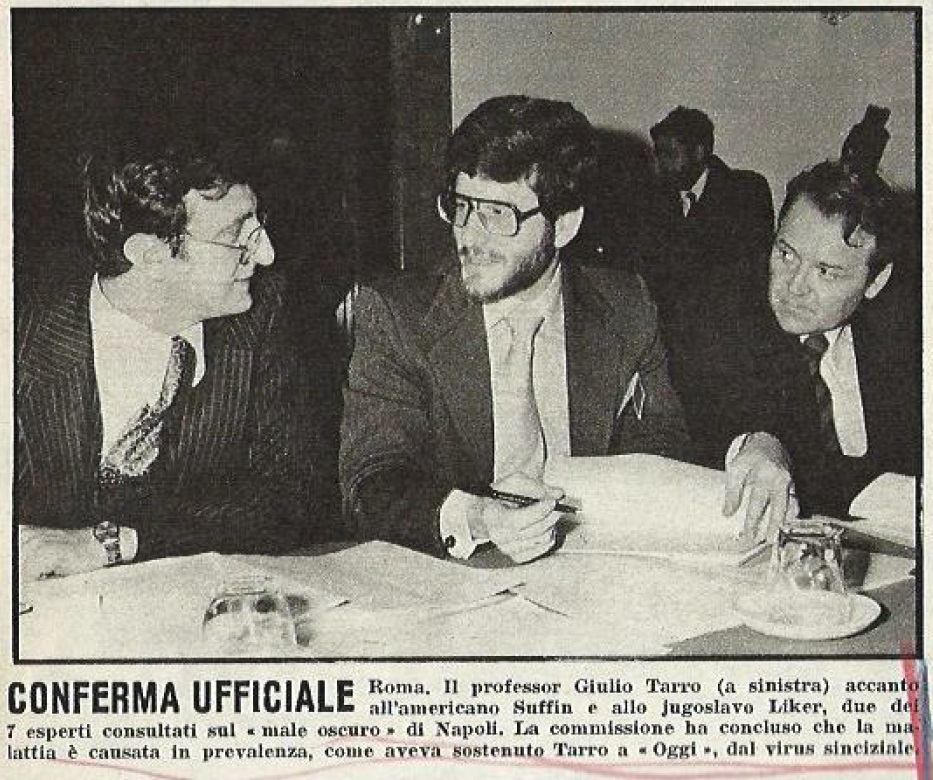
A few months later, the inevitable ministerial commission (directed by Prof. Giovanardi) - after the cloying considerations on the socio-economic degradation at the base of the spread of the infection and the equally sickly wishes for an urban rehabilitation of the city and the creation of an inscrutable "program of child protection "- made official what I had always maintained: the etiologic agent responsible for the epidemic was the respiratory syncytial virus; the unfortunate use of cortisones had aggravated the conditions of the small patients, provoking, in many cases, death; only in part of the 57 dead to the Santobono the gravity of the pulmonary lesions was such to justify the exitus ; there was no significant causal relationship between diphtheria and tetanus vaccines and the so-called "Dark Evil".
I had therefore, right across the board. I decided, therefore, to write a long article not already for the usual scientific journal in order to lengthen my academic curriculum but for the insert "Hello" by Corriere della Sera. And so that what had been presented as a "diatribe between scientists" could be summarized some political and social aspects that have made medical research strand in Italy. A situation that continues today. One more reason to bring back some excerpts of that article.
<< (...) Personally, I never believed that there was an unknown virus. If there had been, it would have done much more damage, because it would have found the population without antibodies, immune defences: instead, we were faced with painful episodic events, scattered here and there. But there have not been, for example, more cases in the same family, ever. I believed, and I think, that we should think of a virus or similar agent, already well known, of those that give pathogenic effects when they go to attack organisms with a larger immune deficiency. Why then this virus, this agent has not been identified? Because all the material for the research was sent to Rome, even though in Naples there is a well-equipped virology centre, like ours, that of Cotugno: now, to be sent, that material is frozen, and with the freezing many viruses remain inactive, they are not identifiable, while maybe they find others that with the deaths of children have nothing to do. It is not the first time that I accuse the authorities of being deaf and blind. Someone has asked that laboratories and other research centres be set up in Naples: this is absurd, because already there are excellent and working ones, unless you want, by the "barons", to create new structures to accommodate the "barons" ".
(...) In short, during the winter season, when there are normally respiratory diseases and children may have even more serious changes, we have been faced with a particularly virulent agent or particularly debilitated organisms? Rather than thinking of an unknown evil, the "legionnaires' disease" or other irrational causes (someone even spoke of cosmic viruses, linked to the presence of UFOs), it would not have been better to concentrate efforts in the search for this "agent", and mobilize all the energy and scientific resources available on the spot? In reality, nothing has been done to avoid the alarmism and psychosis of the virus. For example, it was necessary to carry out studies on children who survived in large numbers, to detect differences in the concentration of antibodies during convalescence compared to the initial period of the disease. To accomplish this, detailed tests and special examinations were needed, using all the information that the Santobono Hospital and the two polyclinics possessed and possessed. So far we have proceeded to Naples with great approximation, to the day.
(...) Why did not leave a message from the municipality, a statement that said what were the exact terms of the situation and, above all, because it was not prepared immediate action of prophylaxis in the most degraded neighbourhoods? The absenteeism of the authorities is very serious and also refers to the social aspects of the problem. In a communication of 15 January 1979 to the health directorate of the Cotugno hospital, I specified that in our virology service they had arrived during the year before blood samples from the paediatric departments of Cardarelli and Santobono, with clinical diagnoses of neuroses and encephalitis. Cardarelli's little patients showed signs of pulmonary involvement, and so some of those of the Santobono. From the most significant and best studied cases it was found that these patients showed an increase in antibody titre, especially for the respiratory syncytial virus (VRS). Unfortunately, in other cases, given the diagnosis sent, the reactivity to this virus was not sought. Given the limited data, I stressed, you can not speculate, but I think it is fair to assume that some of the cases that has dealt with the press in recent days are similar for both the clinical diagnosis (neuroses) and the symptoms (lungs, radiological and clinical) both for the virological data, quite characteristic for the VRS.
(...) The solution to the table of the "mystery of Naples”, only in the course of a week, broke the eggs in the basket to too many people. We had put our finger on a sore, not to make other more appropriate comparisons, and then almost everyone was quick to deny us; but, thanks to the press, we were also recruited by the virology of Cotugno to give our contribution, with studies that would finally take place in Naples, even in the beautiful biological tower of the 2nd faculty, where we improvised virologists with the help of Higher Institute of Health. After a week, we presented the following data to the Technical Commission, which met on Saturday 27 January at the Hygiene Institute of the Second Polyclinic:
- The isolation of theincipient expiratory virus had occurred on various children and in particular: twice on Stefano Bonardi, 9 months still in a coma; 11 times out of a total of 41 patients admitted to acute respiratory diseases.
- These isolations were performed after three to six days of incubation of the cultures (note: incubation, forthis virus, lasts two weeks.
- "Serological conversion" (antibody augmentation) was demonstrated compared to VRS, with regard to four out of five patients.
- A significant "antibody titre" was found for the syncytial virus, compared to other viral antigens, in the unique sera of three deceased patients (findings provided by the Naples Institute of Hygiene);
- In the lung of the child named Cancello (one of the deceased infants), cytopathic aspects were detected in the cells (syncytic formation).
- Two patients on whom positive syncytial virus isolation had been obtained had already presented specific antibody responses.
- (...) Isolation of the virus by itself (if it is not linked to an increase in antibodies, which constitutes indirect confirmation of the virus) is not a test.We can all dwell in the respiratory tract of viruses: the problem is to see which one of these determines the disease. In particular, the isolation of the " Coxackie " on a child of the Santobono , carried out on October 15th, would have been obtained without the counter-test of the increase of antibodies in relation to the same virus: therefore, a limited value and certainly not such as to be generalized . So we had not discovered anything, but no one could have caged a very common virus by "mysterious".
On the same day, I informed the regional coordinator that he had made telephone contact with Dr. Robert Chanock, who runs NIH's laboratory of allergies and infectious diseases (Bethésda, Md, USA). He had been very interested in the so-called "dark evil" of Naples and was ready to send two assistants, Dr. Steve Suffin and Dr. Gregory Prince, to help solve the case. His group could also make a posteriori diagnosis of the anatomo-pathological findings and provide a vaccine in the studio, ready for the next winter season.
An international political case emerged and the American experts had to wait for the label of the World Health Organization (WHO) to arrive in Italy, when the case was not closed only for ostriches, who still did not they wanted to recognize the truth, no longer out of ignorance, but out of bad faith. After a last attempt to remove the cases from the intensive care of the hospital Santobono, for being us. "Guilty" of having immediately carried out the isolation of the VRS, we were able to send our results to the technical commission on 3 and 10 February, accompanied by the letter of resignation, since we were facing a situation of guilty deafness. "Our virology group," the letter said, "has now studied a considerable number of early childhood patients (278) with acute respiratory virosis in three weeks and has observed that while the influenza virus can be ruled out as a cause, there was a repeated isolation of respiratory syncytial virus (VRS) - in 32.01 percent of cases - accompanied by a significant increase in the specific antibody titre (75.78 percent) «Since samples were taken and can be handed over to the control bodies, including foreign ones, the virological staff of the commission are again invited to attend the "laboratories of Cotugno for a more appropriate study of the current epidemic outbreak according to technical details elsewhere reported. one side we are always available for a collaboration to solve the virological problems that may be related to the excess of infant mortality in the ar and Neapolitan, on the other hand we believe that the data in our possession are sufficient for a well-defined position of the technical commission on the etiological level, as has already happened from a clinical and anatomo-pathological point of view. "
“We have come to the conclusion therefore," continued the letter, "to abandon the remarkable work we are currently conducting (only five of our staff is from the Cotugno hospital, while another 15 is part of an independent research group). It should be noted that any consideration of long times to find a cause prevalent to the current respiratory morbidity would be only pretentious and aimed at ends unrelated to scientific truth.
"It is finally announced," The paper concluded, "that there are key figures at the office of hygiene and prophylaxis: 20 of the deceased children were on the autopsy test attacked by the VRS."
Later, we resigned because we were told that we were close to the conclusion - a month after we had found it - and finally the final statement came out. Of WHO experts. In spite of a declaration to our detriment, delivered to them by the improvised virologists of the second polyclinic (and a first political communiqué, which tried to dilute with other viruses the prevalence of VRS as the cause of Neapolitan respiratory virosis), the truth was revealed: we had isolated the VRS on 22 children in the intensive care unit of the Santobono (almost 90 percent of the cases). Perhaps it is good here to present our technical response to the statements circulated on a certain print by the advocates of the "dark evil", who claim that it is sufficient to isolate an enteric or herpetic virus from cases of pneumonia to indicate its cause. On January 22nd our group of virology of the Cotugno hospital had already conducted isolation, as well as serological investigations. The work started in «advance» cannot be cancelled for bureaucratic reasons.
«In this regard, some clarifications:
- It is not true that on 15 February the VRS had been isolated only in our laboratory (see the report of the Istituto Superiore di Sanità of 12 February 1973).
- On January 22, 1979, we already had cases of syncytial cytopathic effects in tissue cultures
- We did not announce that we would isolate the VRS before the experimental work, but that we would seek it.
- HEp2 cells are not just for isolating VRS;the replication time of the VRS is ten hours and with a notable viral load, as the one demonstrated in the patient Bonardi, it was not surprising that the VRS could be isolated in two days and identified on the third; the complement-fixing antigen is formed before the cytopathic (sync) effect.
- Even the Istituto Superiore di Sanità had isolated the VRS from the patientBonardi.
- It is false that we have not documented the evidence of sincerities: researchers from the Istituto Superiore di Sanità have been observing them in our laboratories, material has been provided to other Italian and foreign centres (ProfessorLikar, an expert of the WHO, confirmed our isolation from the cases of intensive care of the hospital Santobono and so Professor Edlinger , head of the Institute of Diagnostic Virology of the Pasteur in Paris); even Italian television had used photos of our crops with VRS syncs since January 27, 1979.
- If you know what you are looking for, it takes less than two weeks to isolate and characterize viruses.
- It is useless to compare the laboratories of the University of Naples, for example, when it is notorious that the cultivation work began one week after January 22, 1979 and with the decisive help of researchers from the Istituto Superiore di Sanità.
- We have said and repeated that the VRS is not easy to isolate, unless you use certain expedients already communicated to the technical commission.
"(...) we therefore reject the controversy, because we were not the ones to feed them, unless we want to hold ourselves accountable for having told the truth. We reject, with indignation, the useless and foolish accusations of wanting to give rise to funding that, indeed, with our early diagnosis we have perhaps blocked, thus avoiding waste of public money. Or at charges? I am already a primary, a university professor who has been stabilized and a life president of the De Beaumont Bonelli foundation for cancer research. It's enough for me and it moves me forward. But I demand respect for the seriousness of the research that our group carries out at Cotugno.
<< In this silly controversy, finally, it was also played with words. The term officially used, "acute respiratory virosis", in children of the first two years of life is practically synonymous with respiratory syncytial virus infection and therefore the generic use of it denounces the will still today to disavow my first intuition. On the other hand, in this myopia there is the refusal to recognize, for bureaucratic reasons, which some artefact of the Santobono (at least 27) had reached our virological service in Cotugno last year. Furthermore, similar samples were received from a paediatric division of Cardarelli. It is not surprising that bronchiolitis and interstitial VRS pneumonia have an inauspicious outcome in mostly artificially suckled babies, inhabitants in overcrowded, wet and badly heated "downs": normally this infection has a mortality rate that goes from one to four percent, depending also on the resistance of the organism and the rigidity of the winter season. The interruption of this "mystery", created on the skin of the children of Naples, has thus clarified the omissions and bad faith of certain authorities, from the hospital to the central ones (see the White Paper on origins, reasons, responsibility for the so-called "dark evil" by "Medicina Democratica" and others, published in Naples on February 24, 1979).
"Even the number of deaths is not homogeneous, because there are considered the summer cases with different symptoms and pathogenesis, as well as those without any autopsy. In any case, there are preventive and curative therapies that can be used in epidemic outbreaks, like this Neapolitan, to counteract a contagious virus such as respiratory syncytial. So there are symptomatic drugs to reduce the viral impact on the respiratory system, and we will not be here to list them, antibiotics when it is necessary to avoid bacterial superinfections, antiviral type "Isoprinosina" with effect similar to "Interferon", which is not available. You will use either corticosteroids or gamma globulin, while it already the use of another live vaccine (see Hilleman and al.: Proc. Soc. Exp. Biol. Med. Vol. 157, pp. 636-642, 1978), in addition to the experimental one by Chanock .Disinfection is the last pearl of this vast history, where the regional and municipal administrators competed with the central ones (Rome) in making the worst mistakes. Clearly, the complete inability of the political class to face the epidemic has come out, a term that scared the Ministry of Health, which was asking for news from the WHO instead of looking much closer to Naples. »
Every now and then I read this old article feeling the blood boiling over the stupidity and arrogance of so many barons who, like forty years ago, continue to mortify the many talents of medicine forcing them to go abroad. But better to abandon this resentment. And so let's talk about cats.
Prof. Dott. Giulio Tarro Phd MD
Primary emeritus of the "D. Cotugno ", Naples
Chairman of the Commission on Virosphere Biotechnologies, WABT - UNESCO, Paris
Rector of the University Thomas More U.P.T.M., Rome
President of the Beaumont Bonelli Foundation for cancer research - ONLUS
Attached all the material concerning the resolution of the so-called dark evil of Naples, linked to the discovery of the virus responsible for bronchiolitis and therefore the Neapolitan epidemic of 40 years ago with all the official status of the time.
In addition, on March 1, 1979 Prof. Dr. Giulio Tarro, took part in the transmission of the late Enzo Tortora "Portobello" with a preliminary interview that clarified the problem of then in a "dark" period due to the bureaucratic delay of medicine that led to the death of 80 children between 1 and 2 years.
