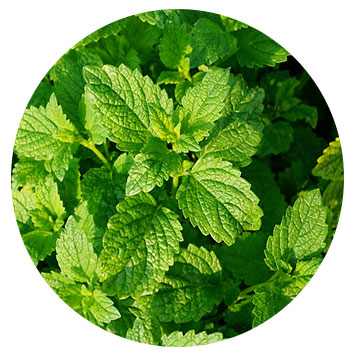
Overview
Peppermint (Mentha piperita), a popular flavoring for gum, toothpaste, and tea, is also used to soothe an upset stomach or to aid digestion. It has a calming and numbing effect, and is often used to treat headaches, skin irritation, nausea, diarrhea, menstrual cramps, flatulence, and anxiety associated with depression. It is also an ingredient in chest rubs used to treat symptoms of the common cold. In test tubes, peppermint kills some types of bacteria, fungi, and viruses, suggesting it may have antibacterial, antifungal, and antiviral properties. Menthol and methyl salicylate, the main ingredients in peppermint, have antispasmodic effects, with calming effects on the gastrointestinal tract. Several studies support the use of peppermint for indigestion and irritable bowel syndrome.
Indigestion
Peppermint calms the muscles of the stomach and improves the flow of bile, which the body uses to digest fats. As a result, food passes through the stomach more quickly. However, if your symptoms of indigestion are related to a condition called gastroesophageal reflux disease or GERD, you should not use peppermint (see "Precautions" section).
Flatulence/Bloating
Peppermint relaxes the muscles that allow painful digestive gas to pass.
Irritable Bowel Syndrome (IBS)
Several studies have shown that enteric-coated peppermint capsules can help treat symptoms of IBS, including pain, bloating, gas, and diarrhea. (Enteric-coated capsules keep peppermint oil from being released in the stomach, which can cause heartburn and indigestion.) However, a few studies have shown no effect. One study examined 57 people with IBS who received either enteric-coated peppermint capsules or placebo twice a day for 4 weeks. Of the people who took peppermint, 75% had a significant reduction of IBS symptoms. Another study comparing enteric-coated peppermint oil capsules to placebo in children with IBS found that after 2 weeks, 75% of those treated had reduced symptoms. Finally, a more recent study conducted in Taiwan found that patients who took an enteric-coated peppermint oil formulation 3 to 4 times daily for 1 month had less abdominal distention, stool frequency, and flatulence than those who took a placebo. Nearly 80% of the patients who took peppermint also had alleviation of abdominal pain.
Itching and Skin Irritation
Peppermint, when applied topically, has a soothing and cooling effect on skin irritation caused by hives, poison ivy, or poison oak.
Tension Headache
One small study suggested that peppermint applied to the forehead and temples helped reduce headache symptoms.
Colds and Flu
Peppermint and its main active agent, menthol, are effective decongestants. Because menthol thins mucus, it is also a good expectorant, meaning it helps loosen phlegm and breaks up coughs. It is soothing and calming for sore throats (pharyngitis) and dry coughs.
Plant Description
Peppermint plants grow to about 2 to 3 feet tall. They bloom from July through August, sprouting tiny purple flowers in whorls and terminal spikes. Dark green, fragrant leaves grow opposite white flowers. Peppermint is native to Europe and Asia, is naturalized to North America, and grows wild in moist, temperate areas. Some varieties are indigenous to South Africa, South America, and Australia.
What's It Made Of?
The leaves and stems, which contain menthol (a volatile oil), are used medicinally, as a flavoring in food, and in cosmetics (for fragrance).
Available Forms
Peppermint tea is prepared from dried leaves of the plant and is widely available commercially.
Peppermint spirit (tincture) contains 10% peppermint oil and 1% peppermint leaf extract in an alcohol solution. A tincture can be prepared by adding 1 part peppermint oil to 9 parts pure grain alcohol.
Enteric-coated capsules are specially coated to allow the capsule to pass through the stomach and into the intestine (0.2 mL of peppermint oil per capsule).
Creams or ointments (should contain 1% to 16% menthol)
How to Take It
Pediatric
DO NOT give peppermint to an infant or small child. Peppermint oil applied to the face of infants can cause life-threatening breathing problems. In addition, peppermint tea may cause a burning sensation in the mouth. For digestion and upset stomach in older children: 1 to 2 mL peppermint glycerite that is specially formulated for children, per day.
Adult
- Tea. Steep 1 tsp. (5 grams) dried peppermint leaves in 1 cup boiling water for 10 minutes; strain and cool. Peppermint tea appears to be safe, even in large quantities.
- Enteric-coated capsules. 1 to 2 capsules (0.2 ml of peppermint oil), 2 to 3 times per day for IBS.
- Tension headaches. Using a tincture of 10% peppermint oil to 90% ethanol, lightly coat the forehead and allow the tincture to evaporate.
- Itching and skin irritation. Apply menthol, the active ingredient in peppermint, in a cream or ointment form no more than 3 to 4 times per day.
Precautions
The use of herbs is a time-honored approach to strengthening the body and treating disease. Herbs, however, can trigger side effects and interact with other herbs, supplements, or medications. For these reasons, you should take herbs with care, under the supervision of a health care provider.
DO NOT take peppermint or drink peppermint tea if you have gastroesophageal reflux disease (GERD -- a condition where stomach acids back up into the esophagus), or hiatal hernia. Peppermint can relax the sphincter between the stomach and esophagus, allowing stomach acids to flow back into the esophagus. (The sphincter is the muscle that separates the esophagus from the stomach.) By relaxing the sphincter, peppermint may actually worsen the symptoms of heartburn and indigestion.
The amount of peppermint normally found in food is likely to be safe during pregnancy, but not enough is known about the effects of larger supplemental amounts. Some experts even recommend modest amounts of peppermint tea to help alleviate nausea during pregnancy. Speak with your provider before using peppermint or any other herbal products during pregnancy.
Never apply peppermint oil to the face of an infant or small child, as it may cause spasms that inhibit breathing.
Peppermint may make gallstones worse.
Large doses of peppermint oil can be toxic. Pure menthol is poisonous and should never be taken internally. It is important not to confuse oil and tincture preparations.
Menthol or peppermint oil applied to the skin can cause a rash.
Non enteric-coated capsules and peppermint oil can lead to heartburn.
Possible Interactions
Cyclosporine
This drug, which is usually taken to prevent rejection of a transplanted organ, suppresses the immune system. Peppermint oil may slow down the rate at which the body breaks down cyclosporine, meaning more of it stays in your bloodstream. DO NOT take peppermint oil if you take cyclosporine.
Drugs that reduce stomach acid
If you take peppermint capsules at the same time as drugs that lower the amount of stomach acid, the enteric-coated peppermint capsules may dissolve in the stomach instead of the intestines. This could reduce the effects of peppermint. Take peppermint at least 2 hours before or after an acid-reducing drug. Antacids include:
- Famotidine (Pepcid)
- Cimetidine (Tagamet)
- Ranitidine (Zantac)
- Esomeprazole (Nexium)
- Lansoprazole (Prevacid)
- Omeprazole (Prilosec)
Drugs that treat diabetes
Test tube studies suggest peppermint may lower blood sugar, raising the risk of hypoglycemia (low blood sugar).
Medications changed by the liver
Since peppermint works on the liver, it may affect medications that are metabolized by the liver (of which there are many). Speak with your health care provider.
Antihypertensive drugs (blood pressure medications)
Some animal studies suggest that peppermint may lower blood pressure. If you take medications to lower blood pressure, taking peppermint also might make their effect stronger.
Supporting Research
Agarwal V, Lal P, Pruthi V. Effect of plant oils on Candida albicans. J Microbiol Immunol Infect. 2010;43:447-451.
Alam MS, Roy PK, Miah AR, et al. Efficacy of Peppermint oil in diarrhea predominant IBS - a double blind randomized placebo - controlled study. Mymensingh Med J. 2013; 22:27-30.
Blumenthal M, Goldberg A, Brinckmann J. Herbal Medicine: Expanded Commission E Monographs. Newton, MA: Integrative Medicine Communications; 2000:297-303.
Cappello G, Spezzaferro M, Grossi L, Manzoli L, Marzio L. Peppermint oil (Mintoil) in the treatment of irritable bowel syndrome: a prospective double blind placebo-controlled randomized trial. Dig Liver Dis. 2007;39:530-536.
Cash BD, Epstein MS, Shah SM. A novel delivery system of peppermint oil is an effective therapy for irritable bowel syndrome symptoms. Dig Dis Sci. 2016;61(2):560-571.
Ford AC, Talley NJ, Spiegel BM, et al. Effect of fibre, antispasmodics, and peppermint oil in the treatment of irritable bowel syndrome: systematic review and meta-analysis. BMJ. 2008;337:a2313.
Herro E, Jacob SE. Mentha Piperita (peppermint). Dermatitis. 2010;21:327-329.
Imagawa A, Hata H, Nakatsu M, et al. Peppermint oil solution is useful as an antispasmodic drug for esophagogastroduodenoscopy, especially for elderly patients. Dig Dis Sci. 2012;57:2379-2384.
Inamori M, Akiyama T, Akimoto K, et al. Early effects of peppermint oil on gastric emptying: a crossover study using a continuous real-time 13C breath test (BreathID system). J Gastroenterol. 2007;42:539-542.
Kline RM, Kline JJ, Di Palma J, Barbero GJ. Enteric-coated, pH-dependent peppermint oil capsules for the treatment of irritable bowel syndrome in children. J Pediatr. 2001;138:125-128.
Korterink JJ, Rutten JM, Venmans L, Benninga MA, Tabbers MM. Pharacolgic treatment in pediatric functional abdominal pain disorders: a systematic review. J Pediatr. 2015;166(2):424-431.e6.
Lane B, Cannella K, Bowen C, et al. Examination of the effectiveness of peppermint aromatherapy on nausea in women post C-section. J Holist Nurs. 2012;30:90-104.
Madisch A, Holtmann G, Mayr G, Vinson B, Hotz J. Treatment of functional dyspepsia with a herbal preparation. A double-blind, randomized, placebo-controlled, multicenter trial. Digestion. 2004;69:45-52.
Magge S, Lembo A. Complementary and alternative medicine for the irritable bowel syndrome. Gastroenterol Clin North Am. 2011;40(1):245-253.
McKay DL, Blumberg JB. A review of the bioactivity and potential health benefits of peppermint tea (Mentha piperita L). Phytother Res. 2006;20:619-633. Review.
Rakel D. Integrative Medicine. 3rd ed. Philadelphia, PA. Elsevier Saunders; 2012.
Shen YH, Nahas R. Complementary and alternative medicine for treatment of irritable bowel syndrome. Can Fam Physician. 2009;55:143-148.
Yamamoto N, Nakai Y, Sasahira N, et al. Efficacy of peppermint oil as an antispasmodic during endoscopic retrograde cholangiopancreatography. J Gastroenterol Hepatol. 2006;21:1394-1398.

