CYBERMED LIFE - ORGANIC  & NATURAL LIVING
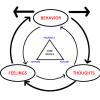
Behavioral Treatment

Behavioral Treatment is a broad term referring to clinical psychotherapy that uses techniques derived from behaviourism and are often used in conjunction with cognitive psychology. While behaviour analysis views everything an organism does as behaviour—including overt and covert, the cognitive psychology viewpoint is that cognition and emotions are the causes of overt behavior.

Those who practice behaviour therapy tend to look more at specific, learned behaviours and how the environment influences those behaviours. Those who practice behaviour therapy are called behaviourists, or behaviour analysts. They tend to look for treatment outcomes that are objectively measurable. Behaviour therapy does not involve one specific method but it has a wide range of techniques that can be used to treat a person's psychological problems.

Applied behaviour analysis (ABA) is the application of behaviour analysis that focuses on assessing influencing environmental variables and the use of learning principles, particularly respondent and operant conditioning, to identify potential behaviour-change procedures, which are frequently used throughout clinical therapy. Cognitive behavioural therapy views cognition and emotions as preceding overt behavior with treatment plans in psychotherapy to lessen the issue. Hallmark techniques of behaviour therapies are overlapping components of cognitive psychology, in addition to behaviour analytic principles of counterconditioning, punishment, habituation, and functional analysis (FA).

Methodological behaviourism, which does not acknowledge the presence of covert behaviour, is not entirely outdated in clinical practice. Exposure and response prevention (ERP), a subcategory of "Flooding" desensitization and derived from methodological behaviourism, for example, is typically used for clients with obsessive-compulsive disorder (OCD). Although not entirely behaviour analytic, the behaviour therapist will first use functional behaviour assessments (FBAs) and behaviour intervention plans (BIPs) before implementing the intervention, and does rely on functional analysis in that respect.


  • Behavioral Treatment

  • Behavioral Treatment

    facebook Share on Facebook

    Behavioral Treatment is a broad term referring to clinical psychotherapy that uses techniques derived from behaviourism and are often used in conjunction with cognitive psychology. While behaviour analysis views everything an organism does as behaviour—including overt and covert, the cognitive psychology viewpoint is that cognition and emotions are the causes of overt behavior.

  • Reduction in behavior problems with omega-3 supplementation in children aged 8-16 years: a randomized, double-blind, placebo-controlled, stratified, parallel-group trial📎

    facebook Share on Facebook
    Abstract Title:

    Reduction in behavior problems with omega-3 supplementation in children aged 8-16 years: a randomized, double-blind, placebo-controlled, stratified, parallel-group trial.

    Abstract Source:

    J Child Psychol Psychiatry. 2015 May ;56(5):509-20. Epub 2014 Aug 22. PMID: 25146492

    Abstract Author(s):

    Adrian Raine, Jill Portnoy, Jianghong Liu, Tashneem Mahoomed, Joseph R Hibbeln

    Article Affiliation:

    Adrian Raine

    Abstract:

    BACKGROUND:While limited evidence suggests that omega-3 supplementation may reduce antisocial behavior in children, studies have not reported on posttreatment follow-up and most treatment periods have been of short duration. This study tests the hypothesis that omega-3 supplementation over 6 months will reduce behavior problems in children both at the end of treatment and at 6 months post treatment.

    METHODS:In this randomized, double-blind, placebo-controlled, stratified, parallel-group trial, a community sample of 8-16 year old children were randomized into a treatment group (N = 100) and a placebo-control group (N = 100). The supplementation consisted of a fruit drink containing 1 g/day of omega-3 or a placebo consisting of the same fruit drink without omega-3. Participants, caregivers, and research assistants were blinded to group assignment. The primary outcome measures of externalizing and internalizing behavior problems were reported by both caregivers and their children in a laboratory setting at 0 months (baseline), 6 months (end of treatment) and 12 months (6 months post treatment), together with the secondary outcome measures of parental antisocial behavior. Data were analyzed on an intention-to-treat basis including all participants.

    TRIAL REGISTRATION:ClinicalTrials.gov: http://clinicaltrials.gov/ct2/show/NCT02016079?term=mauritius&rank=2 RESULTS: Significant group × time interactions were observed with the treatment group showing long-term improvements in child behavior problems. The average posttreatment effect size was d = -.59. Effects were documented for parent reports, but with the exception of proactive and reactive aggression, child-report data were nonsignificant. Parents whose children took omega-3 showed significant posttreatment reductions in their own antisocial and aggressive behavior. This improvement in caregiver behavior partly mediated the improvements observed in child behavior.

    CONCLUSIONS:Findings provide initial evidence that omega-3 supplementation can produce sustained reductions in externalizing and internalizing behavior problems. Results are the first to report improvements in caregiver behavior, and to establish this improvement as a part-mechanism for the efficacy of omega-3.

  • The Effectiveness of Cognitive Behavioral Therapy and Emotional Freedom Techniques in Reducing Depression and Anxiety Among Adults: A Pilot Study📎

    facebook Share on Facebook
    Abstract Title:

    The Effectiveness of Cognitive Behavioral Therapy and Emotional Freedom Techniques in Reducing Depression and Anxiety Among Adults: A Pilot Study.

    Abstract Source:

    Integr Med (Encinitas). 2016 Apr ;15(2):27-34. PMID: 27330487

    Abstract Author(s):

    Hannah Chatwin, Peta Stapleton, Brett Porter, Sharon Devine, Terri Sheldon

    Article Affiliation:

    Hannah Chatwin

    Abstract:

    CONTEXT:The World Health Organization (WHO) places major depressive disorder (MDD), or depression, as the fourth leading cause of disability worldwide. Some studies have found that cognitive behavioral therapy (CBT) represents the most superior approach in treating mild to severe symptoms. Recent literature has indicated a number of limitations to this therapeutic approach. An approach that has received increasing attention within the literature is the emotional freedom technique (EFT).

    OBJECTIVE:The current pilot study aimed to evaluate the effectiveness of CBT and EFT in the treatment of depression and comorbid anxiety.

    DESIGN:The research team designed a pilot study structured as a randomized, controlled trial with 2 intervention arms.

    SETTING:The study took place at Bond University in Gold Coast, Queensland, Australia.

    PARTICIPANTS:Participants (n = 10) were local community members who had screened positive for a primary diagnosis of MDD.

    INTERVENTION:Participants were randomly assigned to an 8-wk CBT or EFT treatment program, the intervention groups. A sample of individuals from the community was assessed for comparative purposes (control group) (n = 57).

    OUTCOME MEASURES:Pre- and postintervention, all participants were interviewed using the Mini-International Neuropsychiatric Interview (MINI) 6.0, and they completed the following validated questionnaires: (1) the Beck Depression Inventory, second edition (BDI-2) and (2) the Depression, Anxiety, and Stress Scales (DASS-21).

    RESULTS:Findings revealed that both treatment approaches produced significant reductions in depressive symptoms, with the CBT group reporting a significant reduction postintervention, which was not maintained with time. The EFT group reported a delayed effect involving a significant reduction in symptoms at the 3- and 6-mo follow-ups only. Examination of the individual cases revealed clinically significant improvements in anxiety across both interventions.

    CONCLUSIONS:Overall, the findings provide evidence to suggest that EFT might be an effective treatment strategy worthy of further investigation.